How structural analysis, vindicated across a decade, points toward what comes next
I. How the conclusions were reached
There is a particular quality to analysis that arrives at uncomfortable conclusions before those conclusions become comfortable to hold. It cannot claim the authority of consensus, because consensus has not formed. It cannot cite peer review, because the relevant peers are not yet asking the same questions. It can only offer its method — the logic by which it moved from evidence to inference — and wait.
The analysis presented in this article began not with a theory but with a series of disillusionments. The events of 11 September 2001, examined carefully, did not resolve into the official account. The global financial crisis of 2008 was not a failure of regulation but a predictable consequence of a system designed to extract rather than distribute. Climategate in 2009 revealed that scientific institutions, no less than financial ones, were subject to the same corrupting incentives. By the time Occupy Wall Street emerged in 2011, the question was no longer whether the system had structural problems, but what those problems were and whose interests they served.
Critical Thinking, which began in January 2012 as part of the Free University that grew from Occupy London, became the methodological crucible. For eight years, a small group met weekly to apply a consistent set of tools: pattern recognition across apparently unconnected domains, the persistent question of who benefits at every node of every system, and a refusal to demand a single falsifiable test where repeating structural patterns constituted their own form of evidence. No taboos were permitted. Everything thought to be known was subject to challenge.
The conclusions that emerged were not ideological. They were structural. By 2017, they were sufficiently developed to attract an invitation from the editor of the Islamic Economics Journal of King Abdulaziz University, who asked for a response to a paper on monetary reform by Bernard Lietaer. The published paper identified three foundational flaws in the organisation of the global political economy: institutionalised hierarchy — authority that is encoded, self-perpetuating, and insulated from feedback loops; the enclosure of the commons — the systematic conversion of shared resources into instruments of extraction; and usury — the deeper problem, subsequently understood, of money itself as a proxy layer that misallocates value.
The conclusions were not ideological. They were structural. And they were made before the events that would confirm them.
These were not conclusions arrived at lightly, or held with false certainty. The methodology insisted on tentative conviction — conclusions as snapshots, always revisable in light of new information. What it did not permit was the defensive reflex of treating institutional consensus as evidence, or of demanding a smoking gun before acknowledging a pattern. Some systems, it was observed, deliberately generate complexity and unresolvable trails. To demand proof that meets the rules of the system you are analysing is to play by rules that system designed.
II. What was said, and what has since become visible
Between 2020 and 2022, a series of papers developed the analysis further across several domains. In each case, claims were made when those claims were not merely contested but actively suppressed. In each case, the subsequent trajectory of events has moved — at varying speeds — in the direction the analysis predicted.
Monetary structure and the digital transition
The 2020 paper Structures and Money in Transition argued that the digital transformation of money — what is now called tokenisation — represented not an evolution of the monetary system but its intensification. The extraction logic, the institutionalised hierarchy, the enclosure of the commons: these would not be resolved by digitising the existing system but amplified by it. Central bank digital currencies, presented as modernisation, were identified as instruments of control — programmable money that would allow unprecedented surveillance and restriction of economic behaviour.
This analysis was marginal in 2020. By 2024, multiple central banks had either launched or piloted CBDC programmes, and the debate about programmable money — who controls the parameters, under what conditions funds can be restricted — had moved into mainstream financial commentary. The Bank for International Settlements published papers acknowledging the surveillance potential of digital currencies that critics had been raising for years. The claim was no longer fringe.
COVID-19 and structural violence
The July 2020 paper COVID-19: Plunder and Population Reduction — Structural Violence in 2020 made claims that were, at the time, not merely unwelcome but cause for deplatforming. It identified the pandemic response as a mechanism serving the interests of concentrated financial and political power, questioned the PCR testing methodology being used to drive policy, and noted the involvement of overlapping institutional networks — pharmaceutical, financial, governmental — whose incentive structures were poorly understood by those analysing the crisis through a purely epidemiological lens.
The subsequent public record has been instructive. The PCR testing controversy, dismissed as conspiracy theory in 2020, was substantially vindicated when the WHO quietly revised its guidance on cycle thresholds. The lab leak hypothesis, suppressed with unusual institutional force in 2020 and 2021, is now the assessed probability of multiple Western intelligence agencies and has been acknowledged as a legitimate question by scientific institutions that previously refused to engage with it. The coordination between government agencies, media platforms, and public health bodies to suppress specific claims — including some that were later vindicated — is now documented in the public record via the Twitter Files and subsequent congressional testimony in the United States.
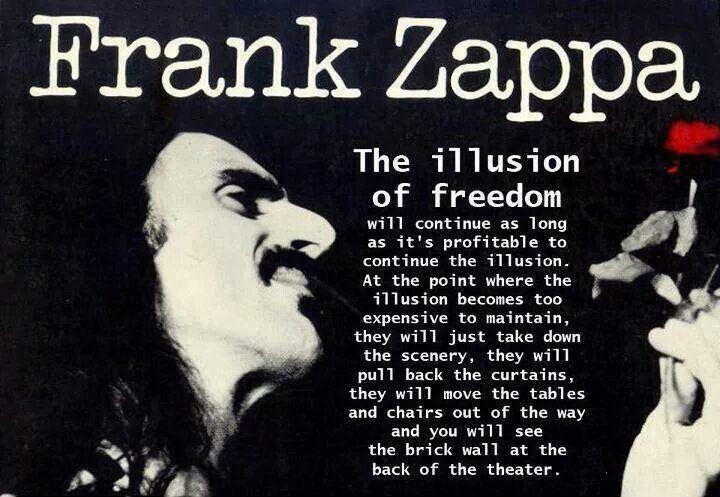
The pattern of institutional response is itself revealing. Claims do not migrate from ‘dangerous misinformation’ to ‘legitimate debate’ to ‘acknowledged concern’ on a timeline that tracks the emergence of new evidence. They migrate on a timeline that tracks the point at which the original narrative becomes too costly to maintain.
Climate and the limits of institutional science
The 2019 paper on systemic risk and climate change argued that the scientific consensus being cited to drive policy was not as settled as its institutional promoters claimed, that the suppression of dissent within academic and governmental bodies was distorting the knowledge-production process, and that the policy consequences — particularly the energy transition as then conceived — carried systemic risks that were not being adequately examined.
The subsequent years have not resolved these questions, but they have made the institutional dynamics more visible. Germany’s energy crisis following the conflict in Ukraine exposed precisely the fragility that critics of rapid renewable-dependent transitions had warned about. The UK government has repeatedly delayed and diluted its own Net Zero commitments. Dissenting scientists, once effectively excluded from institutional platforms, are now publishing in peer-reviewed journals that would not have touched their work in 2019. The suppression has not been vindicated; but the suppression itself has become more visible.
The mechanism is the same in each domain: funding dependency, career incentives, regulatory capture, and the suppression of dissent — until the suppression itself becomes untenable.
What these cases share is not a political position on any of the underlying questions. They share a mechanism: institutionalised hierarchy creates feedback loops that reward conformity and punish dissent, regardless of the underlying evidence. The question is not whether any particular conclusion is correct. The question is whether institutions that systematically suppress the means of knowing can reliably produce accurate knowledge.
III. The map being redrawn from multiple directions
A third form of validation does not come from the confirmation of specific predictions, but from a different source: the independent reconstruction of the same conceptual territory by thinkers who have not read the papers.
In March 2026, Will Ruddick — founder of the Grassroots Economics project — published a long-form essay titled Making Intention Legible. The essay traces how human intention is translated into promise, commitment, record, and coordination, and proposes the ‘commitment pool’ as what it calls ‘a minimal coordination unit’ — a way of rendering capacities, needs, and limits legible as part of a shared social field. The essay draws on anthropology, phenomenology, biology, and information theory to argue that ledgers, vouchers, and commitment pools should be understood not as financial devices but as representational structures through which societies model their own reality.
This is, in substance, the same argument that the CAN framework has been developing since 2020 under the name of direct value handling. The vocabulary is different. The intellectual route is different. The destination is recognisably the same. Where Ruddick describes ‘commitment pools’ as the smallest governable unit of social coordination, the CAN framework describes a coordination layer that replaces the proxy logic of money with direct recognition of contribution, capacity, and need. Both are asking: what happens when the allocation layer is redesigned to make value flows legible without routing them through an extraction mechanism?
Ruddick’s essay has a significant gap, which is worth naming precisely because it clarifies what the structural analysis adds. Ruddick identifies the asymmetry — the powerful can purchase opacity while the marginalised are forced into exposure — but describes it as a moral hazard awaiting correction rather than a designed feature of the system. The structural analysis goes further: institutionalised hierarchy is not a design flaw. It is the mechanism by which the system reproduces itself. Correcting it requires not better design within the existing architecture, but replacement of the architecture.
A second essay, published in early 2026 under the title What Horses Can Teach Us About the Future of Money, approaches the same territory from economics and technology. The author observes that AI, like the horse before it, is a value-creating agent that is entirely indifferent to money. As AI assumes an increasing share of economic production, the symbolic layer of money becomes progressively detached from the actual production layer. Computing power, energy, and data become the real currencies of power, denominated in money but no longer fully captured by it.
This argument converges with the CAN framework’s treatment of tokenisation versus direct value handling. Tokenisation — the digitisation of existing monetary logic — does not resolve the detachment; it intensifies it, concentrating the control of the new production layer in the hands of those who already control the old one. Direct value handling offers a different path: a coordination layer that makes value flows legible at the point of exchange, without requiring their translation into a proxy that serves extraction.
These two essays were written independently, published within weeks of each other, and neither cites the body of work described here. That is precisely the point. When separate thinkers, working from different disciplines and different starting points, arrive at the same structural conclusions, the convergence is its own form of evidence. The pattern is becoming visible from multiple directions simultaneously.
IV. What the pattern points toward
The reader who has followed the argument to this point may find themselves in an uncomfortable position. The structural analysis is coherent. The predictions have been substantially borne out. The convergence from independent thinkers is real. And yet the existing system continues to function — imperfectly, destructively, but continuously. The question that a thoughtful sceptic rightly asks is not whether the analysis is correct, but how one moves from analysis to alternative.
The answer is not revolution, which requires capturing the very institutions that caused the problem. It is not reform, which requires those institutions to redesign themselves against their own interests.
It is something closer to what the development of Linux demonstrated over three decades. UNIX, the operating system that underpinned much of computing from the 1970s onward, was progressively enclosed — its source code locked behind proprietary licences, its future controlled by corporations whose interests lay in maintaining that control. The response was not to petition those corporations but to build outside them.
Linus Torvalds released the Linux kernel in 1991, outside any institutional structure, as something anyone could use, modify, and redistribute. Debian followed in 1993 as a principled distribution — committed to remaining free, governed by its own social contract rather than by commercial interest. What Debian then made possible was the fork: any distribution could build on its foundations, diverge where its community’s needs required, and remain legitimate precisely because legitimacy derived from the work and the principles, not from any central authority. Ubuntu, and hundreds of others, are Debian’s descendants. None required permission. None could be revoked. The incumbent did not fail before the alternative became viable — the alternative became viable, and the incumbent’s claim on necessity gradually weakened.
The Contribution-Access Network is an attempt to build exactly this kind of architecture. It is not a product to be sold or a service to be provided. It is a coordination layer — distributed, autonomous, codependent, self-organising — that makes direct value handling possible at scale. It does not require the existing system to fail before it can function. It begins in the spaces where the existing system already fails, and grows from there.
The shift in consciousness required for this is already underway, and has been for longer than most institutional commentators acknowledge. The distributed networks of mutual aid, skill-sharing, and direct exchange that expanded dramatically during and after the pandemic were not a response to crisis alone. They were the visible edge of a much larger reorganisation of how people actually experience value — through contribution, relationship, and reciprocity rather than through wage, price, and debt.
Douglas Adams, in The Hitchhiker’s Guide to the Galaxy, observed that dolphins had long known the Earth was doomed and had been trying to communicate this to humanity. We assumed they were simply clever and entertaining — making amusing noises, doing tricks. We were not listening. When the demolition came, the dolphins were gone, their farewell message unheard: So long, and thanks for all the fish. Adams intended it as comedy. It reads, with hindsight, as something closer to structural analysis.
The pattern was always there. The signals were always present. The question was never whether the information existed — it was whether enough people were paying attention. Some were. The number is growing. And what they are hearing, from increasingly diverse directions, is a description of the same pattern — and the same possibility.
The Contribution-Access Network framework is developed at outersite.org and github.com. The papers referenced in this article are available via the links below.
This essay draws on more than a decade of co-creative research and analysis within Critical Thinking and the networks that grew from it — and, further back, on the work of a vast, largely uncredited lineage of researchers, writers, historians, scientists, economists, dissidents and ordinary people who noticed structural patterns and said so, often at personal cost and often without knowing their observations were part of a larger picture. Many contributed only partially, unable or unwilling to follow every thread to its conclusion. That limitation was shared. The overarching structure becomes visible not through any individual insight but through the patient, distributed work of connecting what others have seen. This essay attempts to honour that process, not to claim ownership of it.
References
The body of work
Reform Proposals in the Monetary System for Attaining Global Economic Stability (2017)
Journal/SSRN: https://papers.ssrn.com/sol3/papers.cfm?abstract_id=3181772 Open access: https://archive.org/details/cm-018/mode/1up
How We Live — Critical Thinking 7th iteration (2019)
https://archive.org/details/howwelivereferenced/mode/1up
Systemic Risk and Climate Change (2019)
https://archive.org/details/SystemicRiskandClimateChangeComplete/mode/1up
Structures and Money in Transition (April 2020)
https://archive.org/details/structuresand-money-in-transition/mode/1up
The End of the Age of Plunder (May 2020)
https://archive.org/details/end-ofthe-age-of-plunder/mode/1up
COVID-19: Plunder and Population Reduction — Structural Violence in 2020 (July 2020)
https://archive.org/details/covid-19-structural-violence-2020/mode/1up
Taxonomy of Money (December 2020)
https://archive.org/details/dcgi-i-pg-064/mode/1up
Money Methodology for Sustainability and Inclusion (November 2021)
https://archive.org/details/money-methodology/mode/1up
Why I Am Here — series (March–April 2022)
Introduction https://www.outersite.org/why-i-am-here-introduction/
Part 1: Preparation https://www.outersite.org/why-i-am-here-part-1/
Part 2: Application https://www.outersite.org/why-i-am-here-part-2-application/
Part 3: Set To Work https://www.outersite.org/why-i-am-here-part-3-set-to-work/
Part 4: Study https://www.outersite.org/why-i-am-here-part-4-study/
Epilogue https://www.outersite.org/why-i-am-here-epilogue/
The CAN framework
Moving Beyond Money — CAN framework paper
https://value-coordination-can.github.io/can-framework/publications/wp-004-moving-beyond-money/
Converging work cited
Will Ruddick, Making Intention Legible (March 2026)
https://willruddick.substack.com/p/making-intention-legible?triedRedirect=true
What Horses Can Teach Us About the Future of Money (2026)
https://fintechnews.ch/aifintech/what-horses-can-teach-us-about-the-future-of-money/82603/
Douglas Adams, The Hitchhiker’s Guide to the Galaxy (1979)
Pan Books, London. The prologue establishes that dolphins, more intelligent than humans, had long foreseen the Earth’s destruction and attempted to warn humanity before departing. Their farewell: So long, and thanks for all the fish.