Here is an explanation of the Mandela Effect and its consequences prepared by ChatGPT and then integrating DeekSeek’s critique of the first draft:
Below is a revised and strengthened version that explicitly incorporates DeepSeek’s critique, sharpens a few claims, and adds the missing cognitive mechanism—while preserving the original structure and intent.
The Mandela Effect: Memory, Media, and the Hackability of Collective Reality
What is the Mandela Effect?
The Mandela Effect refers to situations in which large numbers of people share the same inaccurate memory of an event, phrase, image, or detail.
The term was coined after many people recalled Nelson Mandela dying in prison in the 1980s—despite his release in 1990 and death in 2013.
Crucially, the phenomenon is not defined by simple error. Its distinguishing features are:
- A shared misremembering across many individuals
- A continuum of confidence, often beginning as uncertainty (“Does anyone else remember…?”)
- Emotional or identity investment that increases once the memory is socially reinforced
Classic examples include:
- “Luke, I am your father” (actual line: “No, I am your father”)
- The Monopoly mascot having a monocle
- “Berenstein Bears” instead of Berenstain Bears
- A cornucopia in the Fruit of the Loom logo (no official logo ever contained one, despite persistent belief)
What’s happening cognitively?
The Mandela Effect is best understood as a normal outcome of how human memory works, especially in social environments.
1. Memory is reconstructive, not archival
Memory does not function like a recording. Each act of recall is a reconstruction, influenced by context, expectations, emotion, and later information. Over time, reconstructions drift—often systematically.
2. Pattern completion
The brain fills in gaps with what ought to be there:
- A wealthy 19th-century capitalist → monocle
- A fruit logo → cornucopia
- A dramatic revelation → a more quotable line
These completions feel correct because they align with cultural templates.
3. Source monitoring errors (source confusion)
A critical mechanism is misattribution of origin:
- A parody line replaces the original
- A repeated meme overrides first exposure
- A friend’s confident assertion becomes “my memory”
In cases like “Luke, I am your father,” decades of parody, advertising, and casual quotation overwrite the original source. The brain remembers the content but loses track of where it came from.
4. Social reinforcement → confidence escalation
Many Mandela Effects begin with fuzzy or tentative recall. Confidence solidifies only after:
- Others agree
- Dissent is absent or mocked
- Repetition replaces verification
What starts as uncertainty hardens into certainty through social validation.
Why social media is a perfect incubator
Social platforms intensify all of the above mechanisms simultaneously.
Algorithmic amplification
Posts framed as:
“Do you remember this… or is it just me?”
trigger curiosity, surprise, and participation—signals algorithms reward aggressively. The more engagement, the more repetition; the more repetition, the stronger the memory.
In-group formation
Shared false memories become:
- Identity markers (“people who remember the real version”)
- Soft gateways to anti-expert sentiment
- Seeds of broader narrative distrust
No conspiracy theory is required—only the suggestion that official explanations are suspect.
Confidence without verification
Social media privileges assertion over checking. Once a version circulates widely enough, familiarity substitutes for evidence.
How mainstream media uses the same mechanics (without the mysticism)
Mainstream media rarely endorses paranormal explanations—but it routinely exploits the cognitive substrate that makes Mandela Effects possible.
1. Nostalgia engineering
Media and advertising rely on emotional memory, not factual precision. If a reference feels right, accuracy becomes secondary.
2. Narrative simplification
Complex events are compressed into:
- Cleaner arcs
- Fewer causal variables
- Sharper heroes and villains
Over time, the simplified version replaces the complex reality in public memory.
3. Strategic ambiguity
When challenged:
- “That’s not what we said”
- “You’re misremembering”
- “That was social media, not us”
This ambiguity is not always deliberate—but it is structurally useful.
Do institutions benefit?
A careful distinction matters here.
It is not that all institutions consciously manufacture false memories. Rather:
Memory ambiguity is exploitable.
Political actors, advertisers, and power-holding systems can:
- Emphasise favourable framings
- Allow inconvenient details to fade
- Let simplified narratives ossify into “common knowledge”
The Mandela Effect reveals how narrative drift can occur without overt deception—and how easily it can be nudged when incentives align.
Why this matters beyond trivia
The Mandela Effect is not about parallel universes. It is a case study in collective epistemic vulnerability.
It shows:
- How confidence detaches from accuracy
- How repetition manufactures reality
- How memory becomes a terrain of influence
This places it squarely alongside:
- Propaganda dynamics
- Manufactured consent
- Post-truth politics
- Reputation laundering
- Historical revisionism
Not because people are stupid—but because human cognition is socially synchronised and therefore hackable at scale.
Bottom line
The Mandela Effect is:
- ❌ Not mass delusion
- ❌ Not evidence of alternate timelines
- ✅ A predictable outcome of normal memory interacting with networked media
Social media accelerates it.
Mainstream media normalises its mechanics.
Power structures can exploit the resulting ambiguity.
Seen this way, the Mandela Effect is not a glitch—it is a diagnostic signal, revealing how fragile our shared sense of “what happened” has become, and how urgently media literacy must grapple with memory itself.
Framed properly, it is less about misremembered logos—and more about the conditions under which truth survives repetition.
=================================================================================
This is of relevance to yesterday’s post on the Epstein Files and recent claims that Epstein is/was a Russian agent/asset.
How do we overcome The Mandela Effect? – CoCreative Learning/Development.
In the past, we’ve referred to how information/evidence has very limited effect on people’s world views which are comprised of “stories“. People’s identity/self-image is under threat from different “truths”; hence the resistance to evidence that challenges world views.
The Critical Thinking project, which ran from January 2012 to October 2019, evolved into a process of co-creative learning that was documented at https://cocreativelearning.org/. Multiple, independent and often conflicting perspectives are considered, discussed and synthesised into a coherent narrative that accords with reality. Progressive iterations of Critical Thinking’s analysis culminated in its 7th and final report in October 2019: How We Live. Two videos summarise this report:
https://odysee.com/@Outersite.org:7/BeyondCriticalThinkingPart1:c
https://odysee.com/@Outersite.org:7/Beyond-CriticalThinkingPart2introducedbyCliveMenzies:0
While the Critical Thinking project ended, co-creative learning and development continued through collaboration among a variety of disparate groups and individuals. I continued to document and share what we learned through outersite platforms/channels. In March 2022, I published a series of six articles, which is effectively the 9th iteration of co-creative learning and development.
Our future (already emerging and taking root) is premised on a view of reality and how we best adapt to it. The process is extensively described at https://cocreativelearning.org/
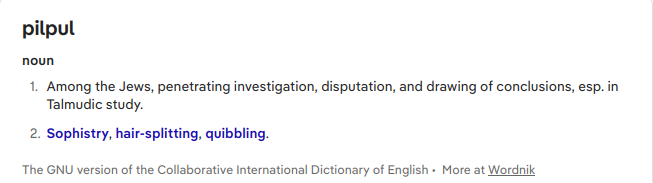
Understanding complex issues such as the Epstein Files, the global political economy and how we handle value (which is at the root of most of the problems we collectively face) is not about certainty but Tentative Conviction, i.e. we hold something to be true until such time as contrary evidence renders something we previously thought to be untenable. It’s about pattern recognition not binary, dialectic arguments from two opposing positions. The art of deception is to be able to maintain opposing, coherent narratives (right v. left, true v. false, black v. white) thereby harvesting energy while deflecting attention away from the real source of problems, events and issues. This is often referred to as pilpul:
In effect we have to unlearn, i.e. regard everything we previously believed as suspect and in need of challenge/verification.
This is already happening among many and coalescing into a shared vision of reality and future abundance through collaboration, rather than competition (particularly for money).