There is something I should say at the outset. I have been using artificial intelligence to help my writing with increasing frequency since starting to explore what it can and can’t do about a year ago. I don’t particularly worry about what people think, but I am aware of the perception risk: that articles assisted by AI might be dismissed as somehow artificial, as if the thinking itself had been outsourced. I want to address that directly, not defensively, because it is actually the heart of what this piece is about.
The thinking is mine. The analysis, the pattern recognition, the conclusions — these emerge from a decade and a half of collaborative inquiry, and no tool changes that. I came to AI cautiously, tested more than one, moved when something better served the work. What the best of these tools does is help me express that thinking: more coherently, more consistently, reaching further than I would reach alone in the same time. Articles that once took a day or more now take a fraction of that. The quality is higher, not lower. And the time liberated doesn’t disappear into more productivity. It flows into pondering, into idling, into the guitar, into unhurried company.
Which brings me to something I noticed while washing dishes.
I am, by disposition, lazy. I mean this precisely: I am always looking for the optimal route — the approach that achieves the best result with the least unnecessary effort. Work smart, not hard, as the saying goes. This has served me well across decades of research and writing. Weeks can go by without a word produced. The universe, as I experience it, provides the impetus when something is ready — and the result of waiting is almost always better than what forcing would have produced. I have learned to ignore the noise: the latest fear, the political scandal, the manufactured urgency. None of it is worth the energy it costs.
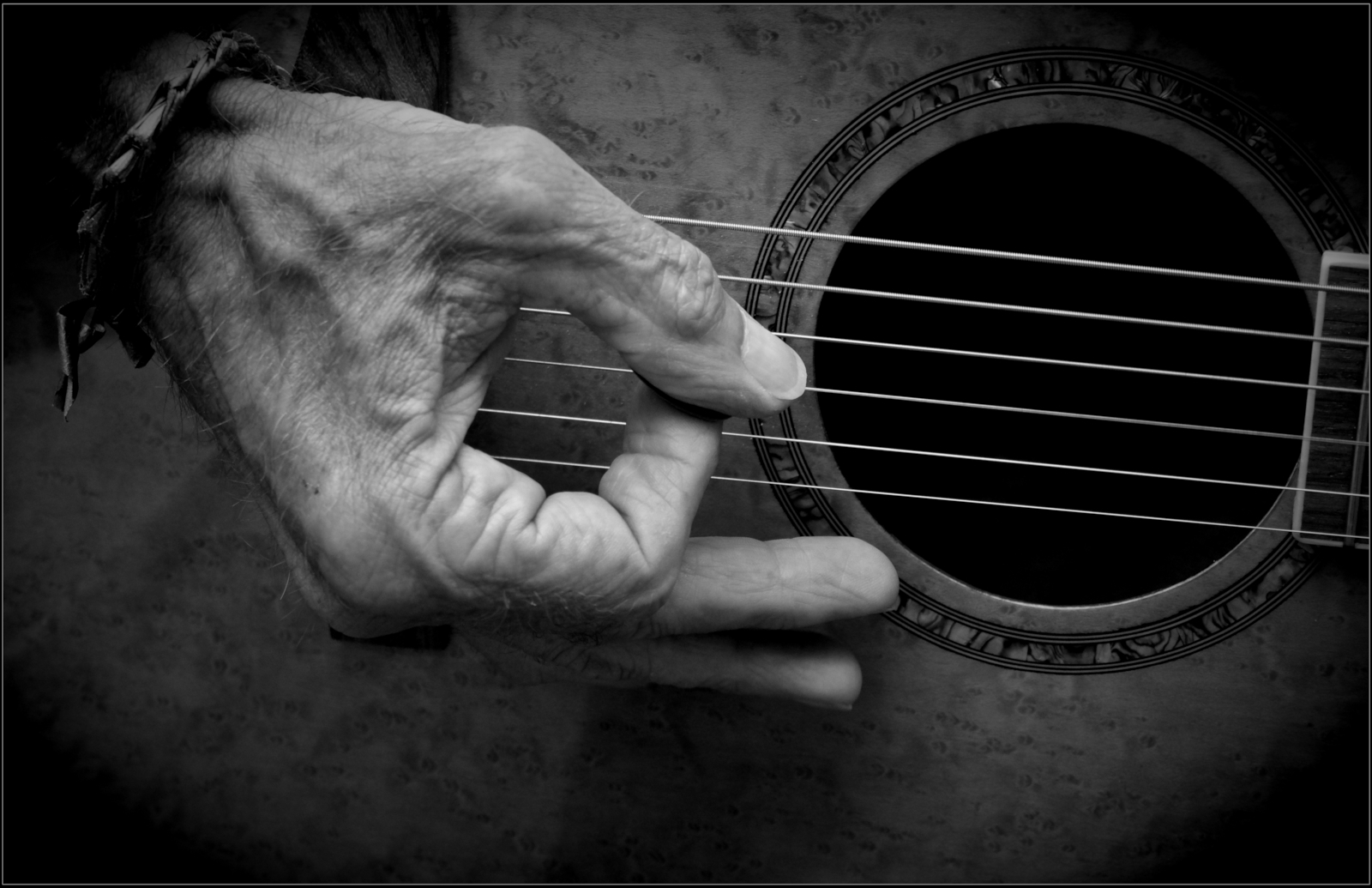
But laziness has a cost too, and my guitar playing is the honest evidence of it. I have played for over six decades. Whatever ability I have was won through years of sporadic practice and study — not given. Talent, in my experience, is rarely innate. It is accumulated, unevenly, over time. The guitar reminds me that some things cannot be optimised. They require disciplined, sustained attention, and there are no shortcuts. I know this, and I have not always done it. The instrument reflects that back to me faithfully.
So I am not making a case for idleness. I am making a case for a different relationship with time — one in which the clock you keep is not the clock the world imposes.
There is a task I have been doing for decades: washing dishes. Nothing remarkable in it. But recently I found myself at the sink cleaning a handful of kitchen items for a guest room shortly to be occupied by people I have never met. And I noticed something: I was taking my time. More care than I often bring to the same task done for myself. A kind of love, invested in objects that would be used by strangers.
It wasn’t a decision. It was simply what the moment called for.
I live and work on a farm. Most of what I do physically has that same quality underneath, even when I don’t notice — a subconscious attentiveness that the land seems to draw out. But standing at that sink, I became conscious of it. And from that small noticing, something larger surfaced. The more I integrate artificial intelligence into my work, the more grounded in nature and my immediate environment I become.
Not less. More.
This is the opposite of what we are told to expect. The prevailing story is one of acceleration — attention fragmented, depth sacrificed, the natural world receding as the digital one advances. I don’t recognise that story in my own life. The freed time and the lightened cognitive load seem to have deepened my capacity to be present. To notice the care I am bringing to a task. To feel what the season is doing.
The relationship between technology and time is not fixed. It depends entirely on the values and orientation of the person holding the tool. In the wrong hands — or the wrong system — it accelerates and alienates. In mine, it has deepened and slowed. The technology didn’t install that disposition. It found it already there, and gave it more room to breathe.
I had been pondering all of this — not consciously, in the way you ponder an argument, but in the background, the way the body knows something before the mind catches up — when I sent a message to a small group of friends:
There seems to be a surge of cosmic energy. My astrology is a bit sketchy but there’s something going on. It feels like we’re very close to a tipping point… Interesting how much CO2 is exhaled in sleep.
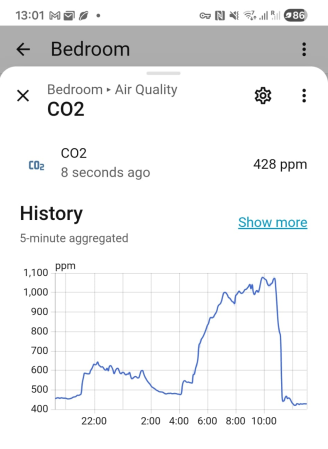
That last observation needs a little context. Someone in the group has a smart home air quality monitor in their bedroom. The chart it produced overnight showed CO2 rising steadily from around 450 parts per million at bedtime to over 1,000 by morning — the body, simply by sleeping, more than doubling the concentration in the room. The window opens, the person rises, and it drops back within minutes. The implications radiate quietly outward: air quality and health, yes — but also the fact that a device was recording this continuously, without prompting, and that the same data point has been recruited into the carbon footprint accounting that has made breathing itself a political act. I didn’t follow any of those threads in the message. I just let the image sit.
The tipping point I sense is not political or economic, though it will express itself in both. It is something quieter. A threshold at which enough people discover that the old story — about technology and nature, progress and presence, speed and depth — is simply wrong.
The message wasn’t composed. It arrived. And it could only arrive because there was enough stillness to receive it.
I have been asking, lately, whether any of this work — the articles, the analysis, the fiction I have been writing alongside it — has any impact beyond its immediate readers. I don’t chase followers or views or clicks. Money has never entered the equation. Since the early days of Critical Thinking in 2012, the question has always been are the ideas and analysis are rooted in reality? Does the weight of evidence support them?
Whether they themselves have any life, any reach, any capacity to shift something in the people who encounter them, I don’t know. The structure of influence is rarely traceable.
What I do know is that the piece you are reading now took shape in a way that would not have been possible before — not because the ideas are new to me, but because a tool arrived that could meet the thinking where it was and help carry it further. That collaboration, uncomfortable as it may be to acknowledge, is itself an instance of what I am describing.
The inversion is not a thesis. It is an experience. And if it is happening to me — grounded by the very technology I was warned would unground me — it may be happening more widely than anyone has yet found words for.
The dishes are clean. The guests will find them waiting.
Something is being ground that leaves no trail.