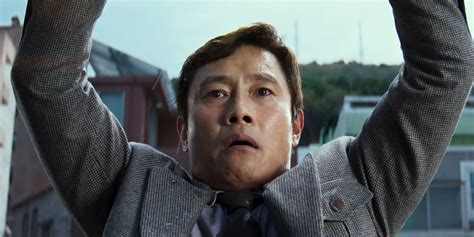
A recent Korean film “No Other Choice” places the main protagonist in conflict with the structure that no longer requires his specialist skills and experience. The one job that he could get has better positioned candidates; his choice is to remove them from the field. The film is a graphic depiction of our self-abusing reality – because we organise ourselves using simple exchange money.
However, a new reality is emerging and gathering momentum as more people become enlightened to new possibilities. Naturally, the institutions that control and benefit from the money structure are resistant to radical change, seeking to maintain the status quo while accelerating human energy and resource extraction against a background of rising instability, human and systems failings. But some of those who work for these institutions can, and do, think of their own and families’ futures because they know that the institutions and structure they’ve relied on hitherto are no longer fit-for-purpose. They are searching for alternatives.
We, who’ve been on this journey of discovery for some years, derived a methodology of co-creative learning and development in order to expand our understanding of our condition and how best to adapt to the rapidly changing landscape. As more people develop “circles of trust” to share information, ideas and creativity, a shared understanding of reality is taking root and resonating with a growing number of people.
These changes have been unleashed and driven by technological innovation and the resulting tools and methods to handle highly complex problems and solutions. The structure is using these to accelerate and expand its control over our lives, to maximise extraction of value but it’s not working because the ground is shifting beneath all our feet. Those that are foresighted and nimble, first work to understand how the future is unfolding day by day and then look for ways to adapt and thrive. Those that have no capacity to think of these things struggle to survive the increasingly hostile money structure.
At root, the transition we’re experiencing is about how we identify and handle value.
What is valuable? Value is subjective and varies according to needs, capacities and unique circumstances at a given time. Price is a proxy for this complex value matrix which bears little relationship to how value changes according to needs, capacities and circumstances. Price discovery through markets are reflections of what someone is willing to pay for something they want or need against what someone is willing to sell for at a given point in time. While retail prices tend to be fixed (for a time) the real value to those interested varies over time according to circumstances other factors.
Our WiseValue discussions have moved beyond the theoretical to opening a public project to co-create hybrid systems to capture, store and transfer, in space and time, unique attributes of transactions, relationships, skills, knowledge and experience while providing a bridge to the legacy money structure, to smooth and aid the transition to the new paradigm.
Contribution–Access Network (CAN)
A coordination system linking contribution, reliability, and care to resource access.
Conclusion
- The theory of six degrees of separation is no longer theoretical.
- It has been implemented in software.
- Platforms like LinkedIn demonstrate that:
- Trust can scale
- Reputation can travel
- Cooperation can globalise
- Value can circulate without money
- The Contribution–Access Network connects this digital reality to physical and institutional life.
- It enables large-scale direct value handling — not through ideology, but through infrastructure.
Documentation and project files are uploaded to GitHub and the latest version of the CAN document is available there: https://value-coordination-can.github.io/can-framework/publications/wp-004-moving-beyond-money/
Everyone, curious and motivated enough, is welcome to contribute/get involved.